TL;DR summary
- FHA loan limits in Florida for 2026 run from $541,287 in most counties to $990,150 in Monroe County, with South Florida, Collier and a few others in between.
- HUD lets you put down as little as 3.5% with a credit score of 580 or higher, or 10% with a score from 500 to 579.
- FHA loans are for a home you'll live in, and they come with mortgage insurance, paid partly up front and partly each month.
- A condo only works with FHA if the building is FHA-approved, or the single unit gets its own approval, so check before you fall for the view.
Somewhere between "just looking" and "wait, could we actually?"
You've got a listing open in one tab and your savings account open in another. The listing is a three-bedroom in Brandon with a screened lanai. The savings account is doing its best (bless it). And somewhere in the back of your head there's a voice insisting you can't buy anything in Florida without 20% down.
That voice has been reading old message boards.
FHA loans are home loans insured by the Federal Housing Administration, part of HUD (the U.S. Department of Housing and Urban Development). Because the government backs the loan, lenders can say yes with a smaller down payment and a credit history that's still a work in progress. It's not a "starter" loan you graduate from. Plenty of people use it on purpose.
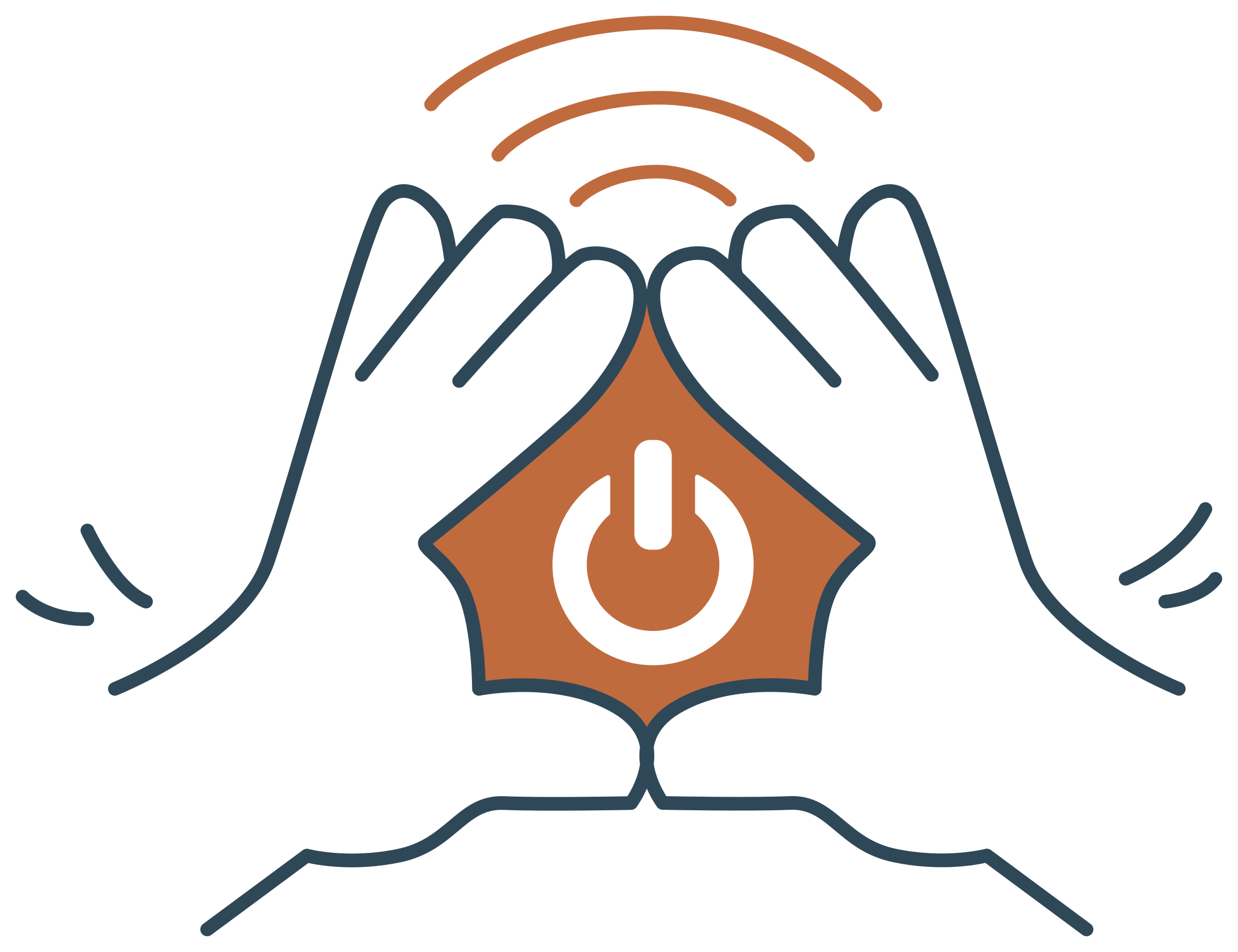
Think of FHA like a theme park ride with a height bar at the entrance. Except this bar runs backwards: instead of checking that you're tall enough, it checks that your loan isn't too tall for your county. Clear the bar, meet a few other rules, and you're on.
1. County limits
In 2026, Florida's FHA limits run from $541,287 in most counties to $990,150 in Monroe.

2. Down payment
HUD allows 3.5% down with a credit score of 580 or higher.
3. Condo approval
The building needs FHA approval, or the unit needs its own Single-Unit Approval.
The height bar: 2026 FHA loan limits in Florida, by county
HUD sets FHA loan limits county by county, based on local home prices. For 2026, most of Florida sits at the national floor of $541,287 for a one-unit home. That covers 51 of the state's 67 counties, including Orange, Hillsborough, Pinellas and Lee. The rest go higher:
| County | 2026 FHA limit, one-unit home |
|---|---|
| Monroe (the Keys) | $990,150 |
| Collier | $764,750 |
| Miami-Dade, Broward, Palm Beach | $667,000 |
| Martin, St. Lucie, Okaloosa, Walton | $603,750 |
| Duval, St. Johns, Clay, Nassau, Baker | $580,750 |
| Sarasota, Manatee | $547,400 |
| Orange, Hillsborough, Pinellas, Lee and most other counties | $541,287 |
Source: HUD's FHA mortgage limits lookup, calendar year 2026, read November 2026. Two- to four-unit homes have higher limits of their own (yes, FHA works on a duplex you live in).
One quick check before you trust any number online: several pages ranking for this search print 2025 figures or the wrong county tier. The table above came straight from HUD's lookup. That's the one worth trusting.
Say you find a $400,000 home in Orlando and put 3.5% down, which is $14,000. Your loan starts at $386,000, comfortably under Orange County's bar.
What this means for you: the limit is for the loan, not the price, so check your loan amount against your county's bar.
What else the ride operator checks: FHA loan requirements in Florida
The FHA loan requirements are set by HUD for the whole country, so they're the same in Pensacola as in Palm Beach. Here's the list, roughly in the order people ask about it:
- Down payment: as little as 3.5% if your credit score is 580 or higher. (Sure.)
- Credit score: from 500 to 579, HUD allows up to 90% financing, which means 10% down. Below 500, FHA isn't available. (Okay, fair.)
- Mortgage insurance: FHA charges an upfront premium, which can be rolled into the loan, plus an annual premium paid in monthly pieces. It's what makes the small down payment possible. (Fine.)
- A home you'll live in: at least one borrower moves in within 60 days of closing and plans to stay at least a year. No beach rentals, no "investment" with a guest room. (Cool, great, that's what it's for.)
On credit, there's fresh news. HUD announced that for case numbers assigned on or after January 1, 2027, FHA will also accept newer score models (FICO 10T and VantageScore 4.0) alongside the classic one, with the same minimums. If rent and utility history are your strong suit, that's worth a conversation.
Your cash to close covers more than the down payment, too; Florida closing costs walks through the rest. And if the down payment is the sticking point, Florida has state programmes that pair with FHA, like Florida Assist, worth a look in Florida first-time home buyer programmes.
What this means for you: before you shop for lanai furniture, check two things: your credit score against 580 and your savings against 3.5% down.
The ride that's closed for maintenance: FHA and Florida condos
Here's where Florida buyers get surprised. With FHA, a condo needs one of three things before the loan can go through: the building is on HUD's list of FHA-approved condominium projects, the unit gets a Single-Unit Approval, or it fits HUD's definition of a "site condominium" (think a detached home that's legally a condo).
Being FHA-approved is about the building, not about you. An association has to apply and keep its paperwork current, and not every Florida building does. So you can be the perfect FHA borrower and still find that the ride you wanted isn't running.
A building that isn't on the list isn't automatically a no, though. Single-Unit Approval exists for exactly that, with its own checks on the building and on how many FHA loans it already has. And Florida's newer condo safety rules, the milestone inspections and reserve studies, add another layer of paperwork lenders look at. Florida condo mortgages walks through the building side.
What this means for you: before you fall for the balcony, check the building's FHA status and which loans fit it.
The part nobody puts on the brochure
There's a quiet math a lot of people do in their heads before they ever call anyone. They look at a price, multiply by twenty percent, look at their savings, and decide the answer is "not yet." Then not yet becomes next year, and next year becomes the one after that.
That math is often wrong, and nobody tells them. FHA was built for exactly the person doing it: someone with a steady paycheck, a credit file with a few dents, and a down payment that's real but modest. It isn't a consolation prize. It's a front gate.
Nobody should spend three years renting because of a rumor about twenty percent.
So find your county's bar, check whether the condo is on the list, and bring both to a call. Most of the time the ride is open, and the line is shorter than you think.
Before you apply
- Look up your county's 2026 FHA limit and compare it to the loan you'd need, not the price.
- Check your credit report so you know which side of 580 you're on.
- Add up your down payment and closing costs, and ask about Florida programmes that can help.
- If it's a condo, check whether the building is on HUD's FHA-approved list.
- Plan to live in the home, because FHA is for the place you call home.